
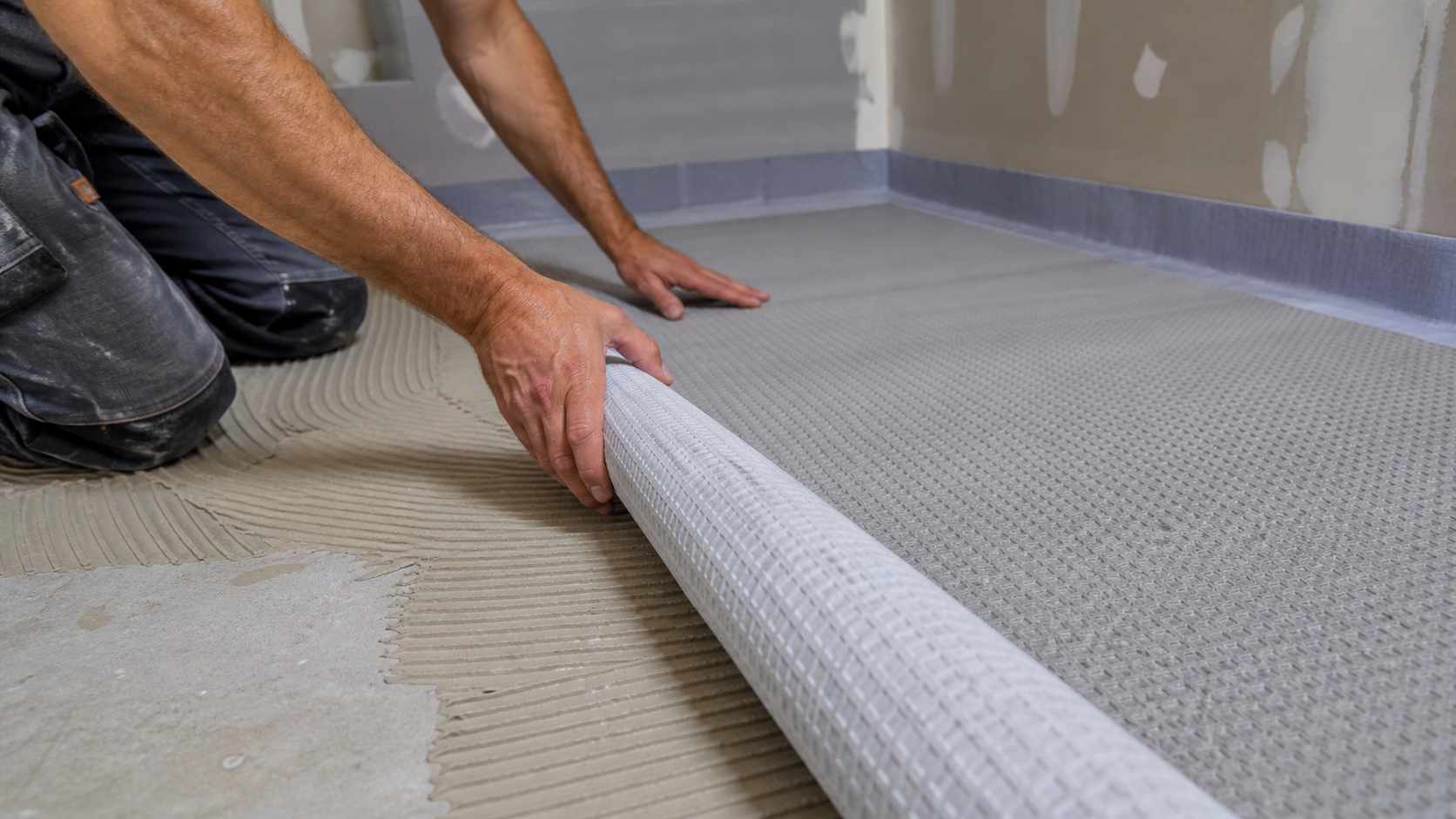
Why Floor Preparation Matters More Than the Tiles
Most people focus on the tiles.
What they look like, how big they are, how they’ll finish.
Fair enough, that’s what you see after all.
But in reality, the most important part of any tiling job is the bit you don’t see:
the floor underneath.
Tiles don’t fail. Floors do
When tiles crack, lift, or come loose, it’s rarely the tile itself that’s the problem.
In my experience it’s usually:
- Movement in the floor
- Poor preparation
- The wrong materials underneath
If the base isn’t solid, the tiles won’t last. It’s that simple.
The biggest issue: movement
Upstairs floors are the main culprit.
Timber and particleboard floors can flex.
That movement, however slight it might feel) transfers straight into the tiles and those tiles don’t flex.
Something has to give.
That’s when you start seeing:
- Cracked grout
- Loose tiles
- Hollow spots
What proper preparation looks like
A good tiling job starts well before the first tile goes down.
Depending on the floor, that might include some or all of the following:
- Strengthening the surface
- Decoupling membrane
- Installing tile backer boards
- Levelling uneven areas
- Using the correct adhesive
It’s not the most exciting part of the job and you don't see it when it's finished, but it’s what makes the job look good and last.
Where people go wrong
The most common mistake I see is this:
Spending money on decent tiles then cutting corners on the preparation.
Or assuming: “It’ll be fine, just tile over it.”
Sometimes it is fine.
Often it isn’t.
The honest reality
If a floor isn’t suitable for tiling, it needs addressing first.
That might mean extra work. Or in some cases, rethinking the plan altogether.
I love tiles and tiling but not every surface should be tiled and a good tiler will tell you that upfront.
Final thought
Tiles are the visible finish but the strength of the job comes from what’s underneath.
Get that right, and the tiles will take care of themselves.
Based in Haverfordwest, I carry out wall ands floor tiling in ceramic and porcelain, along with repairs and re-mastic work. If you’re unsure whether your floor is suitable for tiling, it’s worth checking before you commit.